


KSSSA: What it takes to coach a North Eastern team during Ramadhan



.jpg)

Reading Time: 3min | Thu. 11.04.24. | 11:55
From fasting to field challenges, coaching a North Eastern team during Ramadan tests both dedication and resilience, as Evans Mokaya explains
On Wednesday 10 April, Kenyans were treated to a public holiday as Muslims ended Ramadhan; the ninth month of the Islamic lunar calendar. It started on Sunday 10 March.
During this period across the world, Muslims abstain from drinking and eating in a fast that lasts from dawn to dusk.
For players, particularly those from the North Eastern region whose population is majorly Muslim, the observance of Ramadan often coincides with intense training schedules, and navigating training during this month can be both physically and mentally demanding.
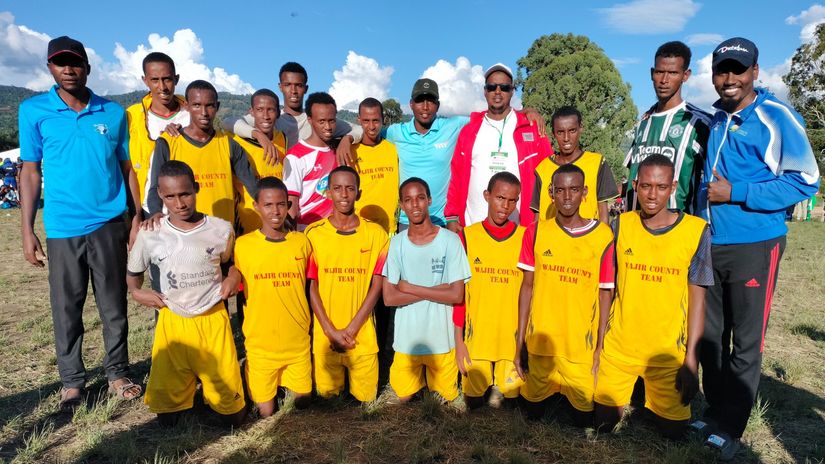
Speaking to Mozzart Sport during the Kenya Secondary Schools Sports Association (KSSSA) Term 1 games in Machakos, Northern Eastern handball team coach Evans Mokaya shed light on the complexities of training a team from that part of the country, with emphasis on the Ramadhan period.
According to Mokaya, fasting can lead to increased fatigue and decreased energy levels, affecting field performance. He noted that they would train early in the morning when the energy levels were still high.
“It has been a challenge for us because it has been a fasting period and it is compulsory for us as Muslims. It was hard but we had to,” he explained.
The coach also highlighted the challenge posed by the cultural and religious differences. Religion forbids Muslims from wearing shorts, making it difficult for them to train in Hijabs. When a hijab fell during the game, a player opted to fix it first instead of running for the ball, giving the opponents an advantage.
“The girlchild is special in a way. Some physical exercises are a no for them because they are against the religion. The costumes they wear in their field should be religious. They cannot wear shorts like others. Maybe getting a good-fitting uniform that suits their religion could be the solution,” he offered.
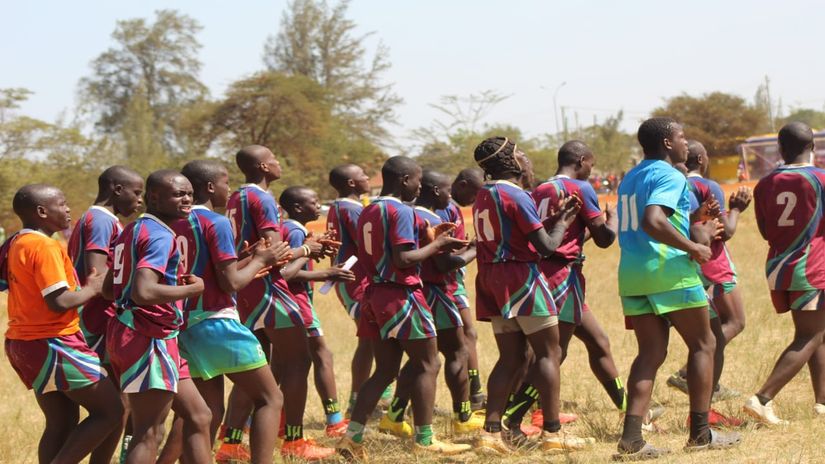
He further noted that the long distance traveled from North Eastern to Machakos was tiresome to the kids. For instance, the Nairobi-Garissa Road was closed indefinitely due to flooding at Arer Area Between Bangaley and Madogo after an Umma Express bus carrying 51 passengers from Garissa to Nairobi was swept away by floods at Lager Areli, Tana River.
Despite the hurdle, Mokaya noted that his priority was to lead his team to victory in the games.
“Travelling too was a challenge. North Eastern is very far from Machakos. The road was washed away,” he offered.
The Eid celebrations coincided with their pool games. The KSSSA officials noted that they set aside some contributions for all Muslims competing to celebrate after the matches.
"We're not happy because our day has been spoiled. Today was our D-day, but we're here on the field. However, we received a message from the officials saying that they've set aside a contribution for our Eid." Mokaya revealed.
He was also glad that the Junior Secondary School (JSS) was introduced to the KSSSA games, noting that it was crucial in building talents at a young age. The majority of his players were aged 12-15.
“They are very mature because it is their level. They compete with colleagues from different junior schools and it is amazing. Through this, we are going to develop good players from the Junior schools. When they proceed to senior school, we will have children who are already experienced,” he concluded.